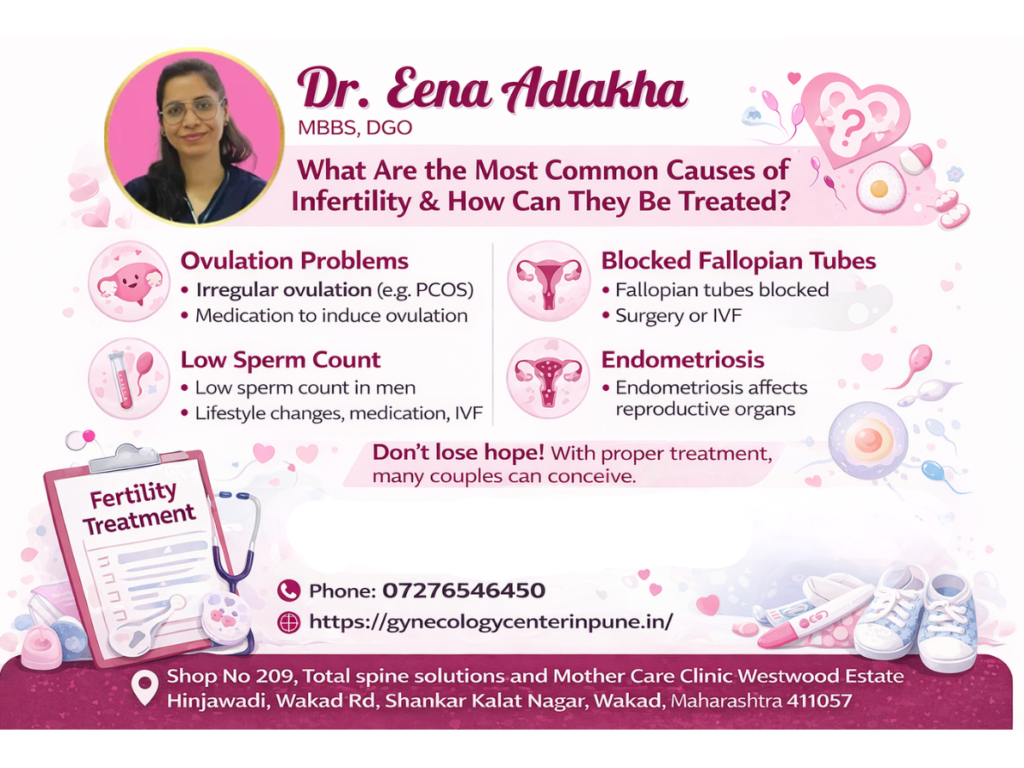
Struggling to conceive can be emotionally challenging, and it’s common for couples to wonder what might be causing infertility. Understanding the most common causes of infertility and knowing how they can be treated is the first step in taking control of your journey toward starting a family. If you’re having difficulty conceiving, consulting a Gynecologist in Wakad like Dr. Eena Adlakha can help you understand the root cause of your issues and find a treatment that works for you.
What Causes Infertility?
Infertility can be caused by a variety of factors, and it can affect both women and men. In fact, about one-third of infertility cases are due to problems in women, another third due to issues in men, and the remaining third due to a combination of factors in both partners. Here are some of the most common causes of infertility and the treatments available:
1. Ovulation Problems
One of the most common causes of infertility in women is ovulation problems, which means that the ovaries are not releasing eggs regularly. Conditions like Polycystic Ovary Syndrome (PCOS), hormonal imbalances and thyroid problems can affect ovulation. When ovulation doesn’t occur regularly, it’s difficult for a woman to get pregnant.
Treatment: Ovulation problems can often be treated with medication like Clomid or other fertility drugs that stimulate the ovaries to release eggs. In some cases, lifestyle changes, such as losing weight or reducing stress, may help with ovulation.
2. Blocked Fallopian Tubes
The fallopian tubes are where the sperm meets the egg, so if the tubes are blocked or damaged, pregnancy may not be possible. Blocked fallopian tubes are often caused by pelvic inflammatory disease (PID), endometriosis or previous surgeries.
Treatment: Treatment options for blocked fallopian tubes may include surgery to remove the blockages or, in some cases, IVF (In Vitro Fertilization), where the egg and sperm are fertilized outside the body, bypassing the fallopian tubes.
3. Low Sperm Count or Poor Sperm Quality
Infertility isn’t only a female issue—male infertility can also play a role in a couple’s difficulty in conceiving. Low sperm count, poor sperm motility, or abnormal sperm shape can make it harder for sperm to reach and fertilize the egg.
Treatment: In many cases, lifestyle changes such as a healthier diet, quitting smoking, or reducing alcohol intake can improve sperm quality. For more severe cases, IUI (Intrauterine Insemination) or IVF may be recommended. In some cases, sperm may be retrieved directly from the testicles and used in IVF treatments.
4. Endometriosis
Endometriosis is a condition in which tissue similar to the lining of the uterus grows outside of it, causing inflammation, pain, and sometimes fertility issues. It can lead to scarring in the reproductive organs, making it harder for the egg and sperm to meet.
Treatment: Treatment for endometriosis may involve medication to control pain and hormonal therapies to reduce the growth of endometrial tissue. In some cases, surgery may be recommended to remove the tissue. If fertility is still an issue, IVF might be suggested to increase the chances of conception.
5. Age-Related Fertility Decline
As women age, their fertility naturally declines. A woman’s egg quality and quantity start to decrease after the age of 35, which can make it harder to conceive. While many women still have successful pregnancies in their late 30s and early 40s, age-related fertility decline can make getting pregnant more challenging.
Treatment: For women over 35 or those experiencing a decline in egg quality, egg retrieval and IVF may be helpful. Some women also consider using donor eggs if their eggs are no longer viable.
6. Uterine or Cervical Issues
Certain conditions related to the uterus or cervix, such as fibroids, polyps or cervical insufficiency, can make it harder for a woman to get pregnant or carry a pregnancy to term. These issues may cause complications like miscarriage or difficulty implanting an embryo.
Treatment: Treatment can include surgery to remove fibroids or polyps or the use of a cervical cerclage to help prevent premature birth. For women who have difficulty conceiving due to these issues, IVF is a common solution.
7. Unexplained Infertility
Sometimes, couples may experience infertility with no clear cause. This is known as unexplained infertility, and it can be very frustrating. Despite testing and evaluations, no specific issues are identified.
Treatment: If infertility remains unexplained, doctors may recommend trying fertility treatments like IUI, IVF, or even using donor sperm or eggs. Many couples with unexplained infertility find success with one of these options.
When Should You Consult a Gynecologist in Wakad?
If you’ve been trying to conceive for a year or more without success, it may be time to consult a Gynecologist in Wakad. Dr. Eena Adlakha, an experienced Lady Gynecologist in Wakad, specializes in diagnosing the causes of infertility and creating personalized treatment plans for her patients. Whether you have ovulation issues, blocked tubes, or male infertility factors, Dr. Adlakha will work with you to find the best treatment.
Dr. Eena Adlakha uses the latest fertility treatments, including IVF and IUI, to help couples achieve their dreams of becoming parents. Don’t let infertility stand in your way—book a consultation with Dr. Eena Adlakha and get the support and care you need.

Dr. Eena Adlakha
Dr. Eena Adlakha Clinic, where women’s health is our priority. Dr. Eena Adlakha, a distinguished Gynecologist, Obstetrician, and Infertility Specialist, brings 17 years of experience (9 years as a specialist) in providing expert medical care with a patient-centric approach.
With advanced training in IVF and laparoscopy, Dr. Eena specializes in comprehensive women’s healthcare, from routine gynecological care to fertility treatments and high-risk pregnancy management.