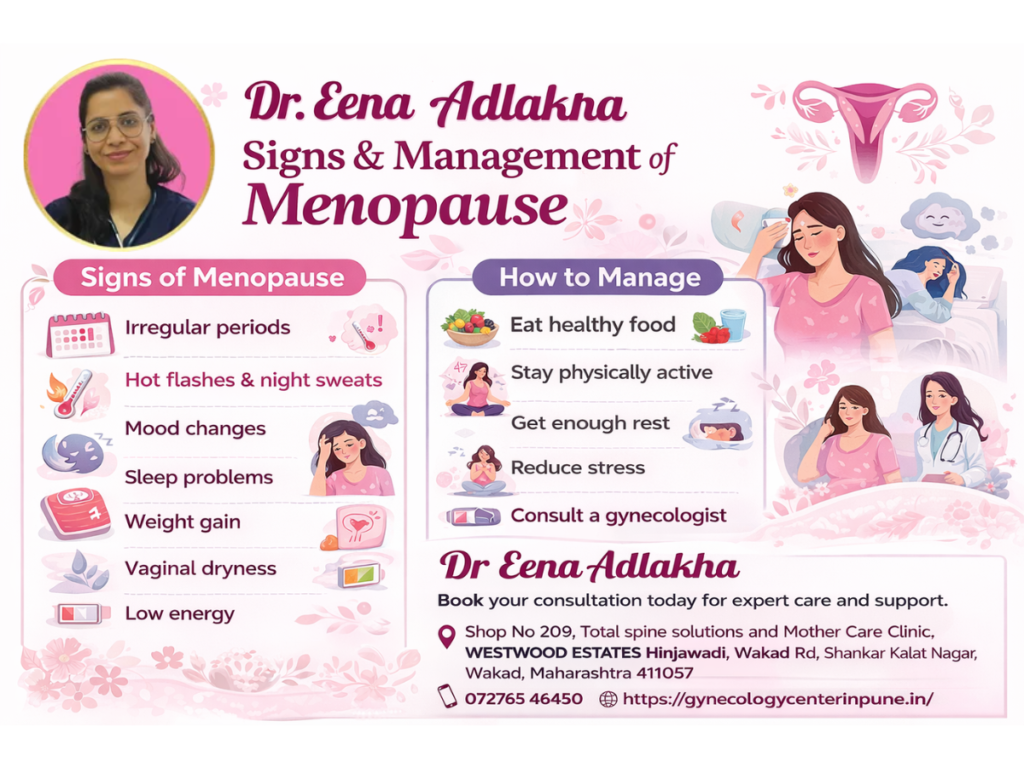
Menopause is a natural phase in every woman’s life, usually happening between 45 and 55 years. While it marks the end of your periods and fertility, it often comes with changes that can feel challenging. If you’re starting to notice signs of menopause, you’re not alone. Many women experience similar symptoms. Let’s explore the common signs of menopause and how you can manage them effectively.
What Are the Common Signs of Menopause?
1. Irregular Periods
One of the first signs of menopause is changes in your menstrual cycle. Your periods might become lighter, heavier, or more irregular. You might also skip a few months, then get your period again. It’s all part of the body’s hormonal changes as it transitions toward menopause.
2. Hot Flashes
Hot flashes are one of the most common symptoms of menopause. These sudden feelings of warmth or heat can happen at any time of day or night, and sometimes they are followed by sweating. Wearing light clothing and keeping your environment cool can help manage this symptom.
3. Night Sweats
Night sweats are hot flashes that happen during sleep, leaving you drenched in sweat. To help with night sweats, try using lightweight bedding and sleeping in a cool room. Avoid heavy meals and caffeine close to bedtime.
4. Mood Changes
Hormonal fluctuations during menopause can cause mood swings, irritability and even feelings of sadness or anxiety. These mood changes are temporary, but practicing relaxation techniques, such as meditation or breathing exercises, can help.
5. Sleep Problems
Many women experience sleep disturbances during menopause. This could be due to night sweats, stress or changes in hormones. Creating a calming bedtime routine, avoiding caffeine, and keeping a cool, quiet room can improve sleep.
6. Vaginal Dryness
As your body makes less estrogen, many women notice dryness in the vaginal area, which can make sex uncomfortable. Using water-based lubricants and vaginal moisturizers can help with this. In some cases, your Gynecologist in Wakad might suggest hormone therapy to help with dryness.
7. Weight Gain
Gaining weight, especially around your belly, is common during menopause. As your body slows down, it can be harder to keep your weight steady. Regular exercise and eating healthy foods can help you stay well during this time.
8. Thinning Hair
Changes in hormones can also affect your hair, making it thinner or easier to damage. Eating healthy foods and using gentle hair products can help stop more damage.
9. Decreased Libido
Many women notice a lower interest in sex during menopause. This can happen because of changes in hormones, dryness, or changes in feelings. Talking openly with your partner and getting help from a Lady Gynecologist in Wakad can help you handle this change.
How Can I Manage Menopause Symptoms?
Menopause doesn’t have to disrupt your life. There are several ways to manage the symptoms, so you can feel your best during this phase.
1. Stay Active
Exercise is one of the best ways to handle menopause symptoms. Moving your body regularly can help you feel better, control your weight, and keep you strong. It does not have to be hard—simple things like walking, yoga, or swimming can help a lot.
2. Eat Well
Eating healthy foods is important for handling menopause. Eating lots of fruits, vegetables, whole grains, and lean meats can help control your weight, give you more energy, and keep you healthy. Staying away from processed foods and sugar can also help you keep a healthy weight.
3. Manage Stress
Stress can make menopause symptoms worse, especially mood changes and trouble sleeping. Doing things like deep breathing, meditation, or focusing on what is happening right now can help you feel calmer and better overall.
4. Hormone Replacement Therapy (HRT)
For some women, hormone therapy can be a good way to handle symptoms like hot flashes and dryness. If you are thinking about hormone therapy, it is important to talk to a Gynecologist in Wakad about the pros and cons.
5. Stay Hydrated and Rested
Drinking plenty of water throughout the day can help with hydration and reduce bloating. Also, prioritize rest and try to get a good night’s sleep to keep your energy levels up.
6. Seek Professional Support
If menopause symptoms are interfering with your quality of life, seeking help from a lady gynecologist in Wakad like Dr. Eena Adlakha is a good step. Dr. Adlakha can provide personalized advice and treatment options to help you navigate this natural phase of life with ease.
When Should I See a Doctor?
If your symptoms are severe or if you’re struggling to manage them on your own, it’s a good idea to consult a Gynecologist in Wakad. Dr. Eena Adlakha can help evaluate your symptoms, offer treatment options, and support you through this transition. Whether it’s hormonal therapy, lifestyle changes or other treatments, Dr. Adlakha can tailor a plan that works for you.
Book an appointment today and get expert care to manage your menopause symptoms.
Conclusion
Menopause is a normal part of life but it doesn’t mean you have to suffer through it. By understanding the symptoms and learning how to manage them, you can stay healthy and comfortable during this transition. Whether it’s through lifestyle changes, medical treatments or just understanding what to expect, there are many ways to make menopause easier to handle. For personalized care and support, consult a Gynecologist in Wakad like Dr. Eena Adlakha.

Dr. Eena Adlakha
Dr. Eena Adlakha Clinic, where women’s health is our priority. Dr. Eena Adlakha, a distinguished Gynecologist, Obstetrician, and Infertility Specialist, brings 17 years of experience (9 years as a specialist) in providing expert medical care with a patient-centric approach.
With advanced training in IVF and laparoscopy, Dr. Eena specializes in comprehensive women’s healthcare, from routine gynecological care to fertility treatments and high-risk pregnancy management.